Overcoming Exhaustion: A Reset for Women Leaders

In my coaching practice, I work with women who are masters of the universe. They are the ones who hold the boards together, manage complex healthcare systems, lead teams through crisis, and ensure their families thrive. On paper, they are the definition of “capable.”

But behind the scenes, there is a quiet, vibrating exhaustion. I call it the Efficiency Trap.

The Efficiency Trap is what happens when your greatest strength—your ability to get things done—becomes your invisible cage. When you are stuck in this loop, you aren’t just busy; you are “over-functioning.” You are mastering everyone else’s world while your own nervous system stays on high-alert, waiting for the next ball to drop.

Why “Self-Care” Isn’t Working

We are often told that the antidote to this exhaustion is rest. But for the over-functioning woman, traditional rest can feel like a threat. When your system is primed for high-performance and constant vigilance, sitting still feels like “dropping the ball.”

You try to take a weekend off, but your mind is still auditing your to-do list. You go for a massage, but you spend the hour mentally optimising your schedule for Monday.

This is because you cannot “think” your way out of a spiralling nervous system. Overwhelm isn’t a time-management problem; it’s a somatic state.

The Alchemy of the Reset

As an Alchemist of Change, I know that true transformation requires a shift in our internal chemistry. To move from “overwhelmed” to “sovereign,” we have to stop trying to manage the external noise and start honouring the internal signal.

We have to teach the body that it is safe to slow down. This isn’t about being less productive; it’s about being more present. When we move out of the high-alert spiral and back into a grounded state, we stop reacting to our lives and start leading them again.

Finding the Stillness

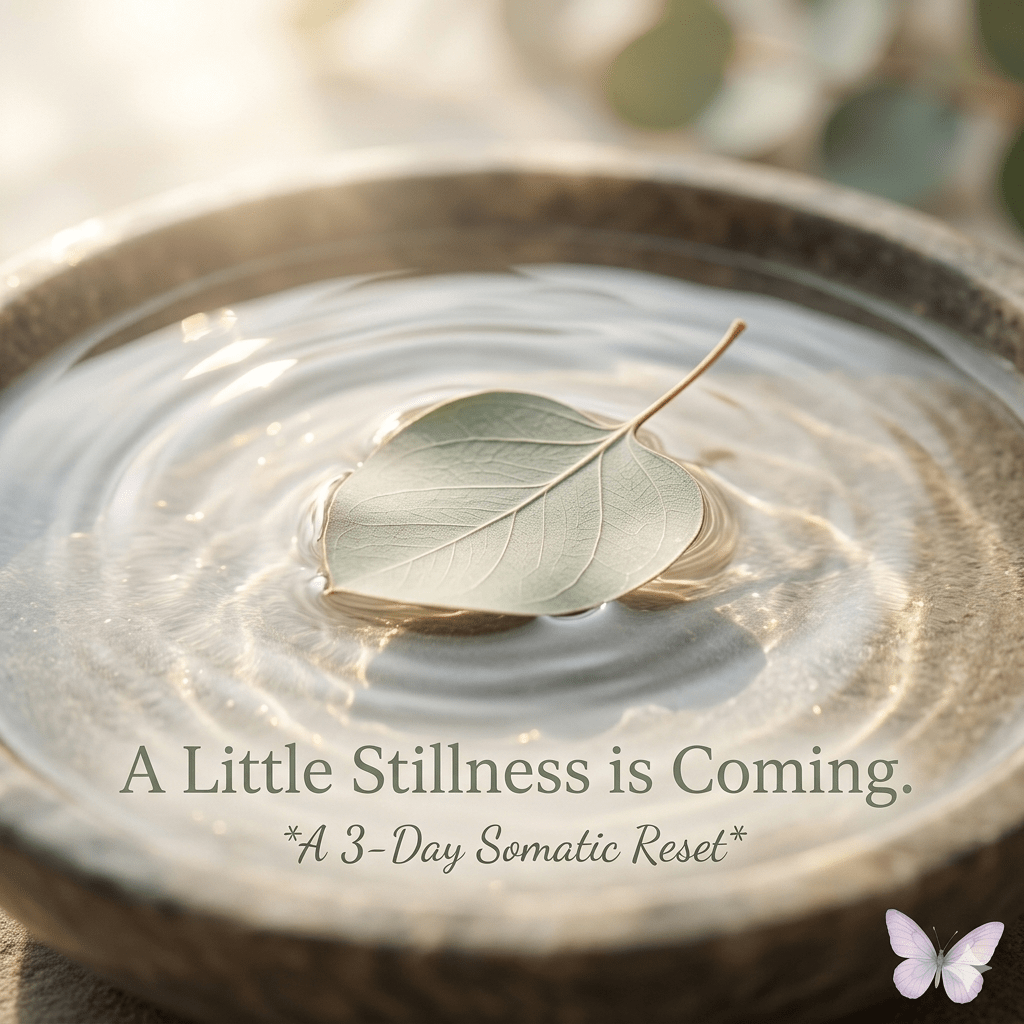
Breaking the Efficiency Trap requires a deliberate pause—not to “do” more self-care, but to reclaim your energetic rhythm. It requires a somatic reset that addresses the body’s need for safety before the mind can find its next strategic move.

If you are tired of being the “reliable one” at the expense of your own spirit, it is time to deconstruct the trap. There is a way to lead from a place of grounded power rather than performance-based exhaustion.


Ready to find your way home to yourself? I am currently preparing for our next 3-Day Overwhelm Reset, a free virtual sanctuary designed specifically for women navigating these transitions.

We will be moving through a guided process of slowing the spiral, reclaiming your energy, and creating the stillness required for your next chapter.

[Click here to join our Private Sanctuary Group for dates and details]

If you prefer a quieter experience or aren’t active on social media, you can join the Priority Notification List below. I will email the dates, the Reset guides, and the daily somatic prompts directly to your inbox so you can move through the process at your own pace.

← Back

Thank you for your response. ✨

“The Strong One” Isn’t Always Okay

Overfunctioning is tricky — because it’s praised.
You’re reliable. You’re capable. You handle things.
People come to you because you can.

But just because you can… doesn’t mean you should.

And just because you’re holding it all… doesn’t mean it’s not hurting you.

🌱 This is your reminder:
You don’t have to earn your rest.
You don’t have to hold everything to be worthy.
You’re allowed to be human, too.

Journal Prompt
💬 When was the last time you let yourself put something down?

Breaking the Cycle of Overwhelming Strength and Burnout

Sometimes overwhelm doesn’t look like falling apart — it looks like overfunctioning.
You’re managing everything. Showing up for everyone.
But inside? You’re exhausted.
This week’s blog explores the hidden cost of being ‘the strong one’ — and what your body actually needs instead.


The hidden coping pattern that looks like strength — but is rooted in survival.

We often think of overwhelm as chaos — spiraling emotions, panic, maybe even falling apart.

But for many of us, it looks more subtle.
It looks like being “on top of things.”
It looks like being capable. Efficient. Dependable.

It looks like being fine.
Even when we’re not.

Overwhelm Doesn’t Always Look Like a Breakdown

Last week, we explored how overwhelm shows up in the body — through fatigue, tension, headaches, insomnia, and more.
But the truth is, most of us don’t slow down when those signs show up.

We do the opposite: we speed up.

We start doing more. Fixing more. Helping more.
We double down on control, and call it strength.


What Is Overfunctioning?

Overfunctioning is a coping mechanism. We respond to emotional or mental overload by trying to manage everything for everyone.

It looks like:

  • Saying yes when you’re already depleted
  • Taking charge of situations that aren’t yours to fix
  • Putting others’ needs above your own, always
  • Micromanaging or overplanning just to feel safe

It’s not laziness we fear — it’s what might surface if we stop moving.


Why We Overfunction

This pattern often develops in early life or during traumatic times.

You may have learned:

  • That love is earned through usefulness
  • That stillness is unsafe
  • That being “the strong one” was your only identity
  • That chaos was normal, and your job was to create order

Overfunctioning helped you survive — and perhaps even succeed.
But now it’s burning you out.


Your Body Doesn’t Want You to Do More

Your body doesn’t want more efficiency.
It wants safety.

It wants rest.
Softness.
Breath.
You need the safety where you can let go. Even for a minute. And not feel like the world will fall apart.

Because deep down, you’re tired.
And tired isn’t a weakness.
It’s a message.


A Gentle Invitation

If you recognize yourself in this, take a breath.
There’s no shame in this pattern — it served a purpose.

But now, you’re allowed to pause.
You’re allowed to soften.

Here are a few gentle questions to hold this week:

  • What am I trying to avoid by staying busy?
  • Where am I holding too much?
  • What would it mean to let something go — even for today?

Start small.
Start honest.
And remind yourself: you don’t have to earn your rest.


💌 Want More Like This?

Subscribe to my newsletter for weekly reflections on the body, boundaries, healing, and coming home to yourself.