Letting Go of 2025: Create Space for Your 2026 Possibilities

Release what no longer serves you before the new year. Explore reflective rituals, celebrate your growth, and step into 2026 with clarity, calm, and possibility.


The last weeks of the year carry a unique energy — a quiet invitation to pause, reflect, and release. Before 2026 begins, we have a chance to shed what no longer serves us, celebrate what we accomplished, and step into the new year with intention, clarity, and calm.

For many of us, the end of the year highlights patterns, habits, or emotional loads that weighed us down. And yet, it’s also a moment to honor our resilience, acknowledge the choices we made, and give ourselves permission to let go.


A Simple Ritual for Releasing 2025

Try this gentle practice to close your year:

1. Write It Down
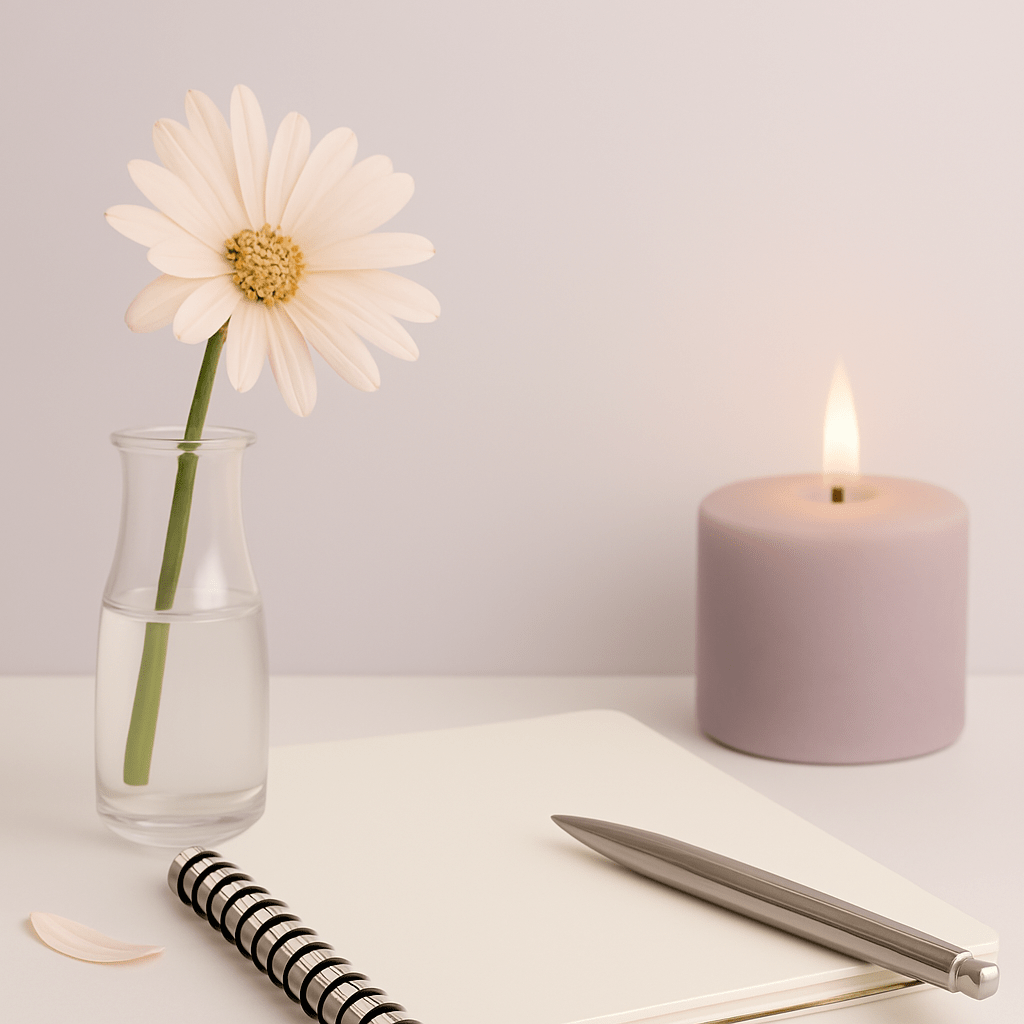
Take your journal or a notebook and list anything from 2025 you’re ready to release — old habits, thoughts, or emotional burdens. Don’t overthink it. Just let it flow.

2. Honor Your Wins
Write down the moments you showed up for yourself, however small. Boundaries you held. Self-care choices you made. Challenges you navigated. They all matter.

3. Symbolic Release
Tear the page, fold it, or burn it safely. Place it somewhere meaningful. Let the act itself signal letting go.

4. Set Your Intention
Write one or two intentions or feelings you want to carry into 2026. Close your eyes and visualize how these intentions will shape your days, your energy, your choices.

This simple ritual invites both closure and transformation — a soft, powerful way to step into the new year lighter, clearer, and more empowered.


Reflection Questions to Deepen Your Practice

Take just 10 minutes and ask yourself:

  • What am I truly ready to release from 2025?
  • What patterns, beliefs, or responsibilities drained me and no longer serve me?
  • How do I want to feel and show up in 2026?

Even a brief reflection can create clarity, calm, and focus, giving you a stronger sense of control and possibility.


Stepping Into 2026

Letting go of what no longer serves us is the first step toward creating space for the life we truly want.

In January, I’ll be opening a few spaces for women who want support, guidance, and clarity to step fully into 2026 with intention and calm.

For now, take this time to honor the year behind you, release the unnecessary weight, and allow yourself to enter the new year ready for possibility.

Because girl… you deserve it. 💛

If you’re ready to step into 2026 with intention and support, I’d love to walk with you. Subscribe to my weekly articles for reflections, small rituals, and guidance to help you protect your energy, celebrate your wins, and create space for what matters most.

How to Prepare for 2026: Reflection Prompts, Year-End Release, and New Year Intention Setting


As the year winds down, many of us begin to feel that subtle shift — the quiet pull inward. December becomes a soft landing place, a moment to breathe, reflect, and tend to the emotional weight we’ve carried through the year.

For many women, the holidays bring both beauty and pressure: extra responsibilities, emotional load, expectations from others, and the desire to “hold it all together.” But within that busyness, there is still opportunity — the chance to honour yourself, name your needs, and gently prepare your heart for the year ahead.

This season is not about perfection.
It’s about presence, clarity, and creating space for something new.


Reflection Questions to Prepare for 2026

Set aside a few quiet minutes — with a cup of tea, a blanket, or soft morning light — and explore these prompts with compassion:

  • What patterns from this year am I ready to release?
  • Which ways of showing up for others nourished me… and which quietly drained me?
  • What small moments, accomplishments, or choices deserve to be celebrated?
  • Where did I push past my capacity? Where did I honour it?

This is not about judgment.
It’s about awareness, truth, and meeting yourself gently.


Envisioning Your Next Year

Once you’ve reflected, allow yourself to dream into 2026 — not in a pressured, goal-heavy way, but with openness and honesty.

  • How do you want to feel on an ordinary Tuesday?
  • What boundaries will help protect and honour your energy?
  • What routines, habits, or supports will help you thrive — emotionally, mentally, or spiritually?
  • What does “being good to yourself” look like next year?

Even the smallest vision can begin to shift something inside you.


A Gentle Reflection Exercise

Take 10 intentional minutes and write down:

  1. One thing you are ready to leave behind in 2025.
    A pattern, a pressure, a belief, a habit, a way of shrinking or overextending.
  2. One practice or habit you want to carry with you into 2026.
    Something that grounded you, supported you, or helped you feel more like yourself.
  3. One imagined moment from your ideal day in 2026.
    How do you wake up? What does your space feel like? What does calm look like for you? What feels possible?

This simple exercise can bring clarity and a gentle sense of direction as you step into a new year.


Next Steps

If you’re feeling the quiet pull toward something different in 2026… you’re in the right place.
This January, I’m opening a few intimate coaching spots for women who are ready to move from overwhelm into clarity, confidence, and possibility.

If you want support navigating your patterns, softening your stress, and creating a life that feels like you again, book a discovery call today.

You don’t have to do this alone.
You just have to begin.

From Overwhelm to Possibility: Reflecting as the Year Ends

A softer, more honest conversation about where you’ve been… and where you want to go.

As we move toward the end of 2025, I’ve been noticing something — in myself, in the women I talk to, in those quiet conversations we only have when we finally slow down.

There’s this feeling.
A mix of tired… hopeful… “I should probably deal with that”… and “wow, I actually made it through.”

You know that feeling, girl — the one where you’re half relieved, half reflective, and fully aware that something in you is ready for a shift.

The end of the year has a way of bringing all those truths to the surface.
Not to judge us — but to get our attention in the most loving way.


Let’s Pause for a Moment — Just You and Me

Before you rush into planning 2026, take one breath with me.

Ask yourself, gently:

  • Where did I give too much of myself this year?
  • And where did I finally start protecting my energy, even a little bit?
  • What patterns kept circling back, asking to be noticed?
  • And girl… what small win did I forget to celebrate? (Because I know you had them.)

You don’t need to go deep.
Just honest.
Just real.

Reflection isn’t about picking apart what went wrong — it’s about understanding what your soul has been whispering all year.


If 2025 felt heavy… that doesn’t mean you failed.

And I need you to really hear that.

So many women I work with tell me the same thing:

“I’ve been overwhelmed for so long, I don’t even notice it anymore.”

We carry emotional loads no one sees.
We hold it together when we’re breaking inside.
We show up, even when we’re exhausted.

But overwhelm is not a moral flaw.
It’s a signal.
A message.
A reminder that a part of you is asking for something softer, simpler, truer.

And that’s where possibility begins.


Looking Toward 2026 — With Intention, Not Pressure

I’m not interested in the “new year, new you” energy.
We’re not doing that.

But I am interested in this question:

What would 2026 look like if you chose yourself a little more?

If you:

  • created space instead of filling every space
  • said “this doesn’t work for me anymore” without guilt
  • stopped carrying what was never yours to hold
  • protected your calm like it was sacred

Because girl… it is.

Clarity doesn’t come from doing more.
It comes from making room for the truth.


A Quick Reflection (Yes, Quick — You Won’t Want to Avoid This One)

Grab your journal, your Notes app, or just your thoughts for 10 minutes:

  1. What is one thing I’m ready to release from 2025?
  2. What is one small way I showed up for myself this year — even if it felt tiny?
  3. What is one intention I want to carry into 2026?

These are the kinds of questions that shift your entire direction… quietly, but powerfully.


If You’re Craving Deeper Support in the New Year…

In January, I’ll be opening a few spaces for women who are ready for a year that feels different — calmer, clearer, more grounded, more you.

If that feels like something you might want, stay with me.
More details coming soon.

And remember, girl —
You don’t have to do this alone.
You never did.

The Masks We Wear: Understanding Identity

The Season of Disguise

October is the month of masks—plastic fangs, glittered eye patches, and cloaks that let us play pretend. But long after Halloween ends, many of us continue wearing masks that no one can see. These aren’t costumes for parties—they’re the personas we adopt to survive, succeed, or simply belong.

We wear them at work, in relationships, online. We smile when we’re hurting. We nod when we disagree. We perform, even when we crave rest. And most of the time, we don’t even realize we’re doing it.

The Invisible Masks We Wear

Some masks are easy to spot: the “perfect parent,” the “always-on professional,” the “chill friend” who never gets upset. Others are more subtle: the silence we keep to avoid conflict, the enthusiasm we fake to be liked, the self we shrink to make others comfortable.

These masks aren’t inherently bad. In fact, they often serve a purpose:

  • 🛡️ Protection: We hide vulnerability to avoid judgment or rejection.
  • 🎭 Performance: We play roles to meet expectations or gain approval.
  • 🧩 Adaptation: We shift our identity to fit into different environments.

But over time, these masks can become so fused to our faces that we forget what’s underneath.

Why We Hide

We learn early that authenticity can be risky. Maybe we were told we were “too much” or “too sensitive.” Maybe we were praised for being agreeable, quiet, or helpful—and internalized that as our value.

So we shape-shift. We become what others need us to be. And in doing so, we sometimes lose sight of who we really are.

The Cost of Constant Camouflage

Wearing a mask too long can lead to:

  • 😞 Emotional exhaustion
  • 😶 Disconnection from self
  • 😔 Difficulty forming deep relationships
  • 😤 Resentment or burnout

It’s not just about pretending—it’s about the slow erosion of authenticity.

The First Step: Awareness

Before we can take off the mask, we have to notice it. Ask yourself:

  • When do I feel most like myself?
  • When do I feel like I’m performing?
  • What am I afraid will happen if I show up unfiltered?

These questions aren’t easy—but they’re essential.

Invitation: A Gentle Unmasking

This week, try this:

Journal Prompt: “What mask do I wear most often—and why?” Write freely. No edits. No judgment. Just honesty.

You might be surprised by what surfaces.

Closing Thought

Masks aren’t always bad. Sometimes they help us survive. But we deserve more than survival—we deserve connection, truth, and the freedom to be fully seen. This October, let’s begin the slow, brave work of unmasking.

Midlife Awakening: How to Take Back Your Life

There’s a moment — quiet but unmistakable — when you realize:

You’ve lost yourself.

Not all at once, not in a dramatic collapse. But slowly, in the name of care, responsibility, love, and survival… you became who everyone else needed you to be.

The nurturer. The fixer. The one who holds it all together.

And now?
You’re exhausted. Disconnected. Maybe even resentful.
But more than anything, you’re ready.

Ready to reclaim the parts of you that got left behind.


The Cost of Being Everything

So many women arrive at midlife with a deep ache — not just from burnout, but from years spent shrinking, shifting, or stretching themselves to meet others’ needs.

You were the reliable one. The strong one. The peacekeeper.

You knew how to make things work — for everyone else.
But in the process, you stopped asking what you needed.
You forgot what it felt like to want something just for you.

This forgetting isn’t a personal flaw — it’s a patterned response, especially for women who’ve spent years in chronic caregiving, high-responsibility roles, or survival mode.


The First Step Back to You

Returning to yourself means learning to protect your energy and honor your limits — without guilt.
It means saying “yes” to what nourishes you, and “no” to what drains you.

And that’s where boundaries come in.

Boundaries aren’t walls. They’re roots.
They keep you steady, grounded, and strong enough to show up fully for yourself and for the people you care about.


💬 Feeling the pull to come home to yourself?

I created something for you:
Boundaries: Reclaim Your Energy & Protect What Matters
A free guide to help you understand, set, and keep boundaries with clarity and compassion.

Inside, you’ll find reflection prompts, real-life examples, and simple, actionable steps to start honoring your needs today.

Click here to download your copy


Returning to yourself isn’t selfish.
It’s sacred.

Because when you stop abandoning yourself, everything in your life begins to shift — toward peace, truth, and the freedom to finally be you again.

- Erika Patterson

© Erika Patterson Coaching 2025. All rights reserved.

You Don’t Have to Hold It All Alone

Hello lovely ladies,

There’s a story many of us carry — the story that says we have to hold everything together all by ourselves.

That the weight of responsibility, of care, of emotional labor, is ours alone to bear.

I remember a time not long ago when I felt that way myself. I was juggling so much—family needs, work pressures, and my own emotions—but I kept telling myself, “I have to do this on my own.” Asking for help felt like failure. But slowly, I realized that carrying everything alone was only making me more exhausted and distant from myself.

What if that’s not true?

What if, instead of carrying it alone, you could begin to share the load?

What if asking for help wasn’t a sign of weakness — but a radical act of courage and self-love?


The myth of solo strength

From early on, many of us are taught to be strong — to manage on our own, to push through, to not “burden” others.

It can feel like if we let go, everything will fall apart.

But in reality, holding everything inside isolates us. It drains our energy and dims our light.

True strength isn’t about doing it all alone.

True strength is knowing when to reach out.


Sharing the load starts with small steps

You don’t have to wait until the mountain feels insurmountable to ask for support.

It can be as simple as saying:

  • “I need a moment to breathe.”
  • “Can you help me with this?”
  • “I’m feeling overwhelmed today.”

Every time you share your truth, you give others permission to step in — and to be human, too.


You are not alone

Remember: you are part of a community, a circle, a web of connection.

You don’t have to do this on your own.

You don’t have to be the only one holding the pieces.

If you’re tired of carrying invisible weight alone, take a breath — and begin to lean in.


A gentle invitation

If you’re feeling stretched thin, remember my Overwhelm Reset — a gentle 3-day email experience.

You don’t have to carry it all alone.

Support is here — and you deserve it.

👉 Join the Overwhelm Reset

With love,

Erika

© Erika Patterson Coaching 2025. All rights reserved.

Decluttering Your Mind: Release Limiting Beliefs

We often think of decluttering as something we do with closets and calendars. But the most powerful clearing happens inside—within our thoughts, habits, and emotional patterns.

Letting go isn’t just about removing what’s outdated.
It’s about making sacred space for what’s aligned.

🧠 The Mental Clutter We Carry

We carry beliefs that were once survival tools—but now act as silent saboteurs:

  • “I have to do it all myself.”
  • “Rest is lazy.”
  • “If I slow down, I’ll fall behind.”

These thoughts become mental furniture—familiar, but no longer functional. They crowd our inner space, leaving little room for creativity, intuition, or joy.

Letting go of these mindsets doesn’t mean forgetting your past.
It means honoring your evolution and choosing thoughts that reflect your becoming.

🔁 Routines That No Longer Serve

Routines can be grounding—or they can become cages.

Ask yourself:

  • Does this habit energize me or drain me?
  • Am I doing this out of alignment or obligation?
  • What would shift if I gave myself permission to do it differently?

Letting go of outdated routines is an act of self-respect.
It’s saying, “I trust myself to evolve.”

💫 Emotional Weight & Energetic Space

Some of the heaviest clutter we carry is invisible:

  • Guilt for resting
  • Resentment from overgiving
  • Fear of disappointing others
  • Shame for needing help

These burdens live in our nervous systems. They shape how we breathe, how we speak, how we show up. And when we release them—through breathwork, journaling, movement, or simply naming them—we create room for joy, clarity, and connection.

Letting go is not a one-time event.
It’s a sacred rhythm of release and renewal.

🧘🏽‍♀️ The Deeper Why

We cling to what’s familiar because it gives us a sense of control.
But control is not the same as safety.
And certainty is not the same as peace.

Letting go asks us to trust the unknown.
To believe that what’s waiting for us is more nourishing than what we’re leaving behind.

It’s not about giving up.
It’s about giving yourself back.

🌱 A Gentle Invitation

This week, choose one thing to release:

  • A belief
  • A habit
  • A “should”

Then ask:
“What am I making space for?”
Let that answer guide your next step.

If you’d like support in exploring what’s ready to be released, I offer free 30-minute Clarity Calls. It’s a space to pause, reflect, and reconnect with what matters most. You can book one here or simply reply to this post with a ✨ if you’re curious.

And I’d love to hear from you:
What’s one thing you’re ready to let go of this week?
Drop it in the comments or DM me—I read every message.

Leave a comment

Finding Freedom from Overwhelm: Small Steps to Healing

There was a time when overwhelm wasn’t just a feeling—it was my everyday reality. I was surviving, not living… until a quiet voice within began to stir, whispering for something more. More rest. More truth. More me.
This is the story of how I found my way back to myself—and how you can, too.

There was a time in my life when overwhelm wasn’t just a feeling—it was the soundtrack of every single day.

I was carrying so much all at once:

  • Healing from deep trauma,
  • Managing the invisible emotional labor of caregiving,
  • Raising three daughters, one with special needs.
  • And quietly trying to rediscover a voice I’d long silenced in an abusive relationship

The weight felt relentless, like a storm that never quite passed.

Some mornings, I’d wake up with a tight knot in my chest, the kind that whispers, “Not today. Not again.” But the world kept spinning, and so did I—barely holding myself together.


I learned early on that being “nice” was safer. It was my armor and my cage all at once.

Pleasing others was easier than rocking the boat, easier than facing the uncomfortable truth that I was shrinking, fading, disappearing.

Every time I swallowed my truth, a little piece of me grew smaller, quieter.

And yet beneath that quiet, something stirred—a deep ache for something different.

For freedom. For authenticity. For joy that wasn’t just a fleeting visitor.


That yearning didn’t come with fireworks or fanfare.

It arrived as a whisper beneath the noise of exhaustion and self-doubt.

It was the courage to say no when my body begged for rest.

The strength to set a boundary, even if it felt shaky and new.

The boldness to finally claim my own needs, even when I feared disappointing others.


Reclaiming myself was not a straight path.

It took time, patience, and an immense amount of grace.

Sometimes it meant sitting with discomfort—leaning into the hard feelings instead of running away.

Sometimes it meant stepping backward to gather strength before moving forward again.

But through it all, I discovered a truth I wish someone had told me sooner. Overwhelm feels heavy and crushing. However, it holds a hidden gift within it.


The gift of clarity.

The opportunity to recognize what no longer serves us.

And the invitation to begin the tender work of letting go.


This space—where overwhelm meets opportunity—is where my coaching heart lives.

If I can rise from silence and from that crushing weight of overwhelm, then so can you. I moved into a place of clarity, agency, and hope.


You don’t have to have it all figured out.

You don’t have to be perfect or “fixed.”

You just need to take the next small step.

And know you’re not alone on this journey.


Reflection to Carry With You

  • When have you felt overwhelmed in a way that changed you?
  • What small step toward yourself feels possible today?
  • How your story, your voice, might be a source of strength for others?

Thank you for being here.

Thank you for your courage to keep showing up.

I see you. I hear you. And I’m walking with you.

Erika

💬 Ready to take your next small step?

Whether you’re navigating burnout, seeking your voice again, or simply craving a moment to breathe—I’m here. Let’s explore what’s possible, together.

👉 Book a free discovery call
👉 Learn more about my 1:1 coaching
👉 Join my newsletter for gentle support + tools

You’re worthy of support. And you don’t have to do it alone.

When Overwhelm Moves Into the Body

What It’s Telling You — and What You Can Do About It

We often think of overwhelm as being “too busy.”
Too many emails. Too many responsibilities. Too much to manage.

But for many of us, overwhelm doesn’t start in the calendar — it starts in the body.

And the truth is, your body always knows before your brain catches up.


What Does Overwhelm Actually Feel Like?

Overwhelm can be quiet or loud, depending on how long it’s been sitting with you.
It may whisper through:

  • Tight shoulders and a clenched jaw
  • Shallow breathing or holding your breath
  • Brain fog, forgetfulness, or decision fatigue
  • Digestive issues or appetite changes
  • A racing heart or sudden wave of anxiety
  • That urgent, irrational need to clean or control something right now

Emotionally, it might feel like:

  • Snapping over small things
  • Numbing out — scrolling, zoning out, overworking
  • Feeling heavy, unmotivated, or disconnected from your voice
  • Crying over “nothing” and then feeling shame for it

If any of this sounds familiar, I want you to know — you’re not broken.
You’ve just been carrying too much, for too long, without enough support.


When the Body Speaks Louder Than Words

A Personal Story

In 2016, I was diagnosed with breast cancer.

At the time, I was in a relationship with a man I loved deeply — someone who struggled with alcoholism. For years, I stayed. I tried. I hoped. I believed that if I loved him hard enough, he’d eventually choose healing.

He didn’t.

He refused to change his life, and I didn’t know how much of his emotional weight I was carrying until it was embedded in my own cells.

It wasn’t until after we ended the relationship — and two years later, after his death — that I discovered he had been living with deep, unspoken trauma. Trauma I didn’t know about. Trauma that shaped him… and shaped the environment I had been living in.

And here’s what I’ve come to understand:

My body held what my heart couldn’t express.

The grief.
The guilt.
The emotional labour of loving someone who couldn’t meet me in the middle.

That diagnosis — though terrifying — became the catalyst for me to stop ignoring my needs and start listening to what my body had been trying to tell me for years. Decades even.

This is the work I now support others with — because overwhelm doesn’t always look like chaos.
Sometimes it looks like quietly surviving.


Coaching vs. Therapy: What’s the Difference?

This is an important distinction — and one I speak about openly with clients.

Therapy focuses on healing past wounds, mental health, and trauma. It’s clinically grounded, and often addresses the why behind what’s showing up.

Coaching is future- and action-oriented. It’s for people who are generally functioning — but feeling stuck, overwhelmed, or unclear. Coaching helps you reconnect to your body, shift patterns, and move ahead with grounded support.

One is not better than the other. Sometimes people do both — and sometimes one naturally leads to the other.

Your well-being is always my priority, and I support you in whatever path feels right for you.


How I Support Clients Through Overwhelm

My coaching work is rooted in the belief that you already hold wisdom. I simply help you hear it again. You already hold wisdom. I simply help you hear it again.

Here’s what that looks like:

1. We bring awareness to what’s real

We name what you’re feeling — physically, emotionally, energetically. We uncover the patterns and get honest about what you’ve been carrying (and why). No judgment. Just space.

2. We reconnect you to your inner cues

Overwhelm disconnects you from your body’s signals. I help you slow down, listen in, and rebuild trust in your own voice.

3. We create simple, grounded next steps

We work gently but steadily. You’ll leave with clarity, practical tools, and a feeling of momentum — without bypassing what’s hard or forcing toxic positivity.

You don’t need to push harder.
You need support that actually sees you.


From Awareness to Action: What Shows Up First?

Sometimes the first step to clarity is simply noticing.
So let me ask:

When you’re overwhelmed, what shows up first?

Do you feel it in your chest?
Do you get short with people you love?
Do you suddenly crave control, or check out entirely?

Start there.
Name it.
No judgment — just awareness.

You don’t have to fix it all today.
You just have to listen.


Journaling Prompt

Take a moment to reflect and write:

“Where in my body do I first feel overwhelmed, and what is it telling me?”

There’s no right or wrong answer — just your truth.


💬 Ready for Support?

If you’re navigating overwhelm and want gentle, grounded coaching that helps you come home to yourself — I’m here.

🟣 Book a free 30-minute clarity call
This is a no-pressure space. We’ll explore what’s feeling heavy or unclear. We’ll find out whether working together is the right fit.
It’s not a coaching session — it’s a chance to connect, ask questions, and get a sense of what’s possible.

🟣 Learn more about 1:1 coaching with me
🟣 Or send me a message if you’re not sure where to start.

You don’t have to carry it all alone.
Let’s take the first step — together.
When ‘Nice’ Becomes a Cage

Somewhere along the way, we were taught that being a ‘good woman’ meant being agreeable, accommodating, and selfless — even at the cost of our well-being. But behind every forced smile and quiet ‘I’m fine’ is a woman who’s been shrinking herself to fit a story that was never hers. It’s time we question the myth of nice — and reclaim the fullness of who we are.

Part 1: The Myth of a Good Woman — How ‘Being Nice’ Has Cost Us Too Much

From the earliest moments of our lives, we are taught a subtle, unspoken lesson:

To be good is to be nice.
To be seen is to be quiet.
To be loved is to be accommodating.

It sounds simple enough, wrapped in gentle words:
“Be polite.”
“Don’t make waves.”
“Take care of others before yourself.”

But beneath this gentle teaching lies a heavy, invisible weight.

Because what we call being nice is often a complex, exhausting dance of survival — a survival learned from trauma, fear, and the desire to belong.

We learn to smooth our edges so we don’t scare others away.
We carry the emotional baggage of everyone around us — the unspoken needs, the silent hurts — as if it were our own.
We apologize for taking up space, for expressing pain, for being too much.
We fold ourselves into silence even when inside, we’re screaming.

And all the while, we wear this mask of niceness like armor — fragile, and yet so demanding.

But here is the truth most don’t say out loud:

Being nice is not the same as being kind.

Kindness is rooted in presence — an authentic honoring of both ourselves and others.

Niceness, by contrast, is often rooted in performance — a scripted behavior shaped by fear of rejection, conflict, or abandonment.

When we choose niceness over truth, we sacrifice the most vital parts of ourselves: our voice, our boundaries, our worth.

We swallow our honest feelings to keep the peace.
We enable harmful patterns because confronting them feels too risky.
We become invisible caretakers, holding the world together at the expense of our own sanity.

But silence is not kindness.
Self-abandonment is not compassion.
Saying yes when every fiber of your body says no is not generosity — it is a slow erasure of self.

Behind many smiles lies a quiet desperation: burnout, loneliness, resentment, and exhaustion from pretending that everything is fine.

In our last series, we named the invisible work that women do every day — the emotional labor that holds families, friendships, and workplaces together.

Now, it’s time to name the cost of that labor.

It’s time to stop over-giving, to stop sacrificing ourselves for others’ comfort.

Because you deserve more than survival.

You deserve boundaries that feel like safety — not prisons.
You deserve relationships rooted in respect — not fear.
You deserve to say “no” without guilt, and to hold your ground with love.

This series is a quiet revolution — a reclaiming of your power, your voice, and your heart.

It’s not about shutting people out or becoming cold.
It’s about becoming whole — fully alive and unapologetically you.

If you feel tired of carrying invisible burdens, if you’ve ever felt crushed beneath the weight of being “nice,” this series is for you.

Together, we will unravel the myths, heal the wounds, and build a new foundation — one where kindness and strength live hand in hand.

Because your worth is not measured by how pleasant you are.

It is measured by your courage to be real.


Coming up next:
What a Boundary Actually Is — And What It Isn’t

We’ll break down the myths around boundaries and explore what they look like when they’re rooted in love — not fear.

If this resonates, I’d love to hear from you.
Hit reply, or forward this to someone who needs to know: you don’t have to earn your worth by being pleasant.

With warmth,
Erika